


In people with advanced kidney cancer, where the cancer has spread to distant organs, the cancer is usually not completely curable. The goal of treatment is therefore to control the growth of the cancer and reduce its impact on your life. Combinations of different treatments may be recommended by different doctors, including urologists, medical oncologists who prescribe anti-cancer medications and radiation oncologists who treat people with radiation. Throughout, this team of specialists will work with you and your family doctor to help you control your symptoms and live as normal a life as possible.
Treatments for advanced kidney cancer include:
Active Surveillance (Observation):
 Because of the risk of toxic side effects and non-curative nature of cancer therapy, some patients with metastatic kidney cancer may benefit from beginning their treatment with active surveillance. This is especially the case when the cancer has been discovered by accident, it might be growing so slowly that systemic drugs can be put off. If the cancer starts to grow quickly or cause symptoms then active treatments will be recommended. A small percentage of patients might live without symptoms from the cancer for a very long time, sometimes years, so your doctor might advise you to observe for a period of time.
Surgery to remove cancer that has spread:
 In a very small number of people, the cancer spreads to only one or two places; if this is the case it can be possible to try to cut out all the metastatic cancers (a metastasectomy). Some patients can live a very long time in these circumstances, but it really only applies to patients where there is only one or two spots elsewhere and they can all be safely removed.
Surgery to remove cancer in the kidney:
If your health is otherwise good, there is evidence that removing the original cancer in the kidney improves survival and helps other treatments against metastatic tumours work better. This cytoreductive nephrectomy would be performed by your urologist (or uro-oncologist).
Targeted Therapies
 Chemotherapy is rarely used in kidney cancer. Targeted therapy blocks specific signals within the cancer. One strategy is to interfere with blood supply to the cancer, which slows or stops the growth of the tumour, and sometimes causes it to shrink. This group of drugs are called tyrosine kinase inhibitors. The tyrosine kinase inhibitors used to treat kidney cancer are: axitinib, bevacizumab, cabozantinib, lenvatinib, pazopanib, sorafenib, sunitinib, tivozanib. Only bevacizumab, is an intravenous targeted therapy; the rest are pills.
A second group of medicines for kidney cancer called mTOR inhibitors work by blocking a protein called mTOR that normally helps cells grow and divide, but can be overactive in cancer. The mTOR inhibitors used to treat kidney cancer are everolimus (pill) and temsirolimus (intravenous).
Finally, the newest targeted therapy to show effectiveness against kidney tumours is belzutifan (pill). It works by blocking a protein called HIF-2 that controls both cancer cell growth and formation of new blood vessels. Currently, belzutifan is only indicated for kidney cancer caused by von Hippel-Lindau disease, but clinical trials are investigating it in a variety of treatment settings for advanced kidney cancer.
New clinical trials are underway to determine if other types of cell signalling can be turned off to prevent the growth of kidney cancer. One potential targeted therapy called savolitinib is a MET inhibitor that is being studied in certain genetically-selected patients with papillary renal cell carcinoma.
Other new types of inhibitors are in clinical trials for kidney cancer.
Immunotherapy
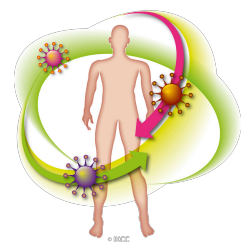 Before targeted therapies were developed, immunotherapy with cytokines such as interleukin-2 (IL-2) and alpha-interferon was commonly used to treat kidney cancer that had spread to other parts of the body. These drugs worked in a very small subset of people by activating killer T cells, which are the part of the bodys immune system that destroys cancer cells.
Now new kinds of immune therapy (also called immuno-oncology or IO) are being tested in clinical trials in kidney cancer. In addition, several IO agents have been approved for the treatment of advanced renal cell carcinoma. Learn more on these therapies in the section: Understanding immuno-oncology
Radiation therapy:
 A Radiation Oncologist uses high-energy radiation to kill cancer cells. Radiation can be very helpful if the cancer causes a lot of problems in one location, e.g. cancer in the bone causing pain, cancer in the kidney causing bleeding, cancer in the brain causing swelling. Radiation is used as a palliative means of controlling symptoms (e.g. pain). However, SBRT (stereotactic body radiation therapy) is increasingly being used to control kidney cancer growth and can be safely combined with systemic therapies (targeted therapies and immunotherapy).
Clinical Trials:
 A clinical trial is sometimes incorrectly perceived as a last resort, but with rapidly developing new drugs and dosing regimens it should be considered the first port of call. A clinical trial is a way of testing new treatments, or existing treatments used in a new way. Clinical trials are not right for every person; not every person is right for a clinical trial. If a clinical trial is available it can be an interesting opportunity to consider. For further Information on clinical trials please read here: Understanding clinical trials
Palliative care:
 Palliation doesnt mean the end of the road or that the cancer is in its terminal stages. Palliative care is all the treatments that your team recommends to improve your symptoms and improve your quality of life. Your family doctor, your medical oncologist and your other doctors will help you with this. Sometimes palliative care physicians and nurses are consulted, and they can often provide specialised advice. Palliative treatment can improve quality of life by alleviating symptoms associated with advanced cancer.
Alternative Therapies:
 Everyone wants the best health care for themselves and their loved ones. If there are no suitable standard medical therapies available, alternative therapies might be proposed by well-intentioned friends, relatives or an internet or social media source. These are called alternative because they have not been scientifically proven to shrink cancers or help patients. Worse still, they might have been proven not to help or to even cause harm. Examples of unhelpful or harmful alternative treatments include mega-dose vitamins, herbal products or extreme diets. Some alternative therapies can interfere with medicines normally prescribed by a doctor, causing harm to the patient. Its important to inform your doctor or nurse if you are considering these therapies.
Complementary Therapies:
On the other hand, complementary therapies can complement established medical treatments, improving quality of life and symptoms. These include mindfulness meditation, relaxation techniques, remedial massage therapy, psychotherapy, prayer, yoga, acupressure and acupuncture. If there were any chance that the kidney cancer has spread to bones, chiropractic or osteopathy would not be a good idea.
