


Kidney cancer can be sub-divided into several different flavours or sub-types based on the appearance of the cancer cells under a microscope (the histology of the cancer). The type of kidney cancer is not usually important for surgery, but can be critical if more treatment is needed later.
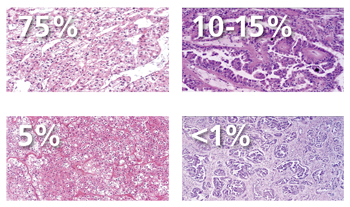
The most common histologies are:
- Clear cell: The most common form of kidney cancer, accounting for about 75% of people with renal cell carcinoma. When viewed under a microscope, the individual cells that make up clear cell renal cell carcinoma appear empty or clear.
- Papillary: About 10% to 15% of people with renal cell carcinoma have this form of the disease. These cancers form little finger-like fronds (called papillae, hence papillary).
- Chromophobe: Accounts for about 5% of renal cell carcinoma cases. The cells of these cancers are large and pale, and have certain other distinctive features.
- Sarcomatoid: Distinct, long spindle-shaped cells packed in a high density. When present they usually only make up part of the tumour. Sarcomatoid features appear in about 5% of all renal cell carcinoma tumours, but are found in nearly 20% of metastatic cases.
- Other rare types: About 5% of people have other, rarer forms of kidney cancer
To find out what type of kidney cancer you have, please refer to your Pathology Report or ask your doctor.
